
Thanks to all who participated in the session at #Eurocomm17 - here's a handy summary from Martin.
Category: Alignment Labs
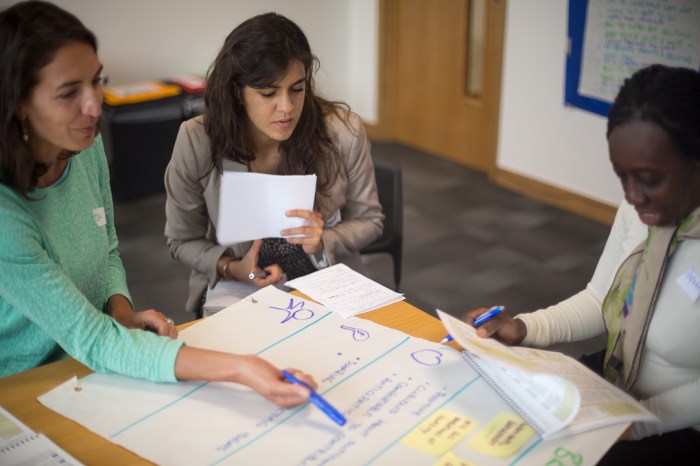
An effective method to #alignyourorg
“How can I have more purposeful & productive conversations, bring out the wisdom of a group, encourage feedback between people, and reach shared awareness in meetings? How can I generate and weave together a diverse range of ideas, develop creative solutions and build a group consensus?” Here's our answer - skill up on your group … Continue reading An effective method to #alignyourorg

What does it take for people to align behind change? Six top tips & tools from #FacWeekchat
This is the question that brought together 69 facilitation, communications and change management professionals over two one-hour twitter chats on October 23, during International Facilitation Week. In this post I’ll share six top tips and some of the tools that were shared in response.
The twitter chats were co-hosted by Michael Ambjorn of the International Association of Business Communicators (IABC), Faith Forster of the Change Management Institute (CMI) and myself for the International Association of Facilitators (IAF). Our aims were to bring people together to connect with and learn from each other on a topic of mutual interest, and also to make connections and foster broader collaboration between our associations and between our professions.
Participants were located as far afield as Canada, USA, Serbia, UK and India. Our experience of change included local and international work with large and small organisations in a variety of sectors and industries including health, education, IT, faith and international aid & development.
So what did we learn? What does it take for people to align behind change?
1. The context must be conducive. People align behind change “when external pressures have made the need for change evident”. “The facilitator as midwife can only help a client that is already pregnant”!
2. High level vision and goals, and ideally values as well, must be clear and shared. Alignment happens when there is “a clear purpose… before a decision on what to do, a focus on energy & momentum for change”.
3. There must be inclusive and authentic participation. “Holistic participation in co-creating vision is the key to create buy in”. “Co-design, co-creation, collaboration”. “Convene all with a stake in change”. “Everyone wants change, but no-one wants to be changed”. Alignment does not happen “when when people forget that changes requires the involvement of others” or “when change is imposed from above without proper consultation or facilitation”.
4. Humility, patience and deep listening is required. “Be honest and transparent about the challenges that will be faced, otherwise when failure happens you lose people’s trust”. “Take time, constant process checks, take time, listen, take time, acknowledge resistance (did I mention take time?)”. “Come to terms with the antibodies in the system and talk candidly about them”. “The disruptive power of good listening skills”. “Pay as much attention to the intangibles amongst people as to what is explicitly being said”.
5. Be open to what needs to emerge, while remaining focused on the vision. “Start with possibilities rather than a project plan” and “be aware of groups emerging needs… [allow] the group synergy to flow”. Alignment did not happen “when people didn’t respond to emerging needs, and when personal issues took precidence over common vison”.
6. Nevertheless, leadership must also be be clear, decisive and inspiring. “Be a leader that makes tough decisions. The notion of change is disruptive, but strong leadership can mitigate people risk”. Make a “powerful invitation, expressed openly with integrity”. “Discussions about change are so often are negative, ie. about failure – we need to inspire people, enable them”.
What tools and techniques can help?
Favoured approaches to addressing the challenges of aligment and change included the Art of Hosting/Art of Participatory Leadership, Organisational Development, Quality Management, Coaching and Mediation, Graphic Facilitation (especially in multilingual contexts), the work of Perry Timms on ‘hacking adaptable organisations’ and of course ICA’s Technology of Participation (ToP).
Some of the particular tools referenced were Story Boarding and Lead with a Story, My Goals My Action Steps, Power/Interest Matrix, RASCI, Ladder of inference, CSITO’s Constellation Collaboration model and the ToP Focused Conversation method.
What can we learn from each other?
What can communications and change management professionals learn from facilitation? “If you want to bring people with you you have to involve others, and facilitation is a great way to do that”. Facilitation “can help transform communications ‘from cascade to conversation’” – “communicators can learn from facilitators about how to structure conversations once people are engaged”. “Change management can get caught up in project management processes – facilitation keeps the focus on what is important”. “At a simple level, facilitation can help managers learn to run more productive and enjoyable meetings”.
What can facilitators learn from communications and change management? How “to get people ‘in the room’ for facilitation, to engage all those who will never be ‘in the room’… and to communicate the results”. Also “good use of data gathering tools”, “ways to measure/evaluate the outcomes of their facilitation work” and how to “draw out stories as they relate to the task at hand, and use these stories for sense making”.
We could all benefit from each other’s professional standards and competency models – IAF’s Facilitation Core Competencies, IABC’s communications Global Standard andCMI’s Change Management Foundation & Master Competencies.
For more of what we shared, including links to many of the examples and tools referred to, see the edited highlights on Storify or find all 707 tweets at #FacWeekchat on Twitter.
 Repost from Martin Gilbraith
 This is the question that brought together 69 facilitation, communications and change management professionals over two one-hour twitter chats on October 23, during International Facilitation Week. In this post I’ll share six top tips and some of the tools that were shared in response.
The twitter chats were co-hosted by Michael Ambjorn of the International Association of Business Communicators (IABC), Faith Forster of the Change Management Institute (CMI) and myself for the International Association of Facilitators (IAF). Our aims were to bring people together to connect with and learn from each other on a topic of mutual interest, and also to make connections and foster broader collaboration between our associations and between our professions.
Participants were located as far afield as Canada, USA, Serbia, UK and India. Our experience of change included local and international work with large and small organisations in a variety of sectors and industries including…
View original post 721 more words

#StartUpSeason – Business Plan Basics
Einstein is often quoted as having said... 'If I had an hour to solve a problem and my life depended on the solution, I would spend the first 55 minutes determining the proper question to ask, for once I know the proper question, I could solve the problem in less than five minutes.' Well, what … Continue reading #StartUpSeason – Business Plan Basics
See us in action
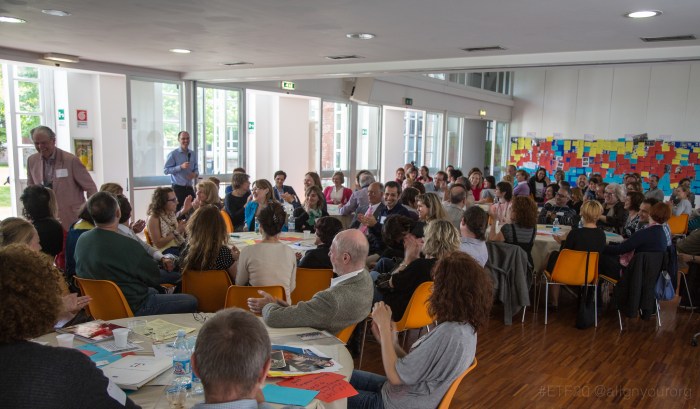
“How might you creatively engage a diverse, international group of around 120, both face-to-face and online, to reflect, learn and bond together in celebrating 20 years of collective achievement?” Here's how we did it with the European Training Foundation, an agency of the European Union: http://www.youtube.com/watch?v=OVjcbO-KqUI The project was recognised by the International Association of Facilitators … Continue reading See us in action
Facilitation case study: Celebrating 20 years with the European Training Foundation in Turin – #ETF20
Nicely summarised case study of the work Martin and I did with the European Training Foundation just recently. Check out the full post below…
“How might you creatively engage a diverse, international group of around 120, both face-to-face and online, to reflect, learn and bond together in celebrating 20 years of collective achievement?”
This was the question facing Michael Ambjorn and I as we prepared to work with the European Training Foundation (ETF) in Turin earlier this month. Part of the answer lay in the ‘Wall of Wonder’ method of ICA’s Technology of Participation, captured by Michael in a timelapse (below – the #FacHistory hashtag at the end refers to another 20-year anniversary project currently underway and using the method, Celebrating the development of facilitation – world-wide and history long.)
ETF is a decentralised agency of the European Union that supports transitional and developing countries “to harness the potential of their human capital through the reform of education, training and labour market systems”, within the context of the EU’s external relations policy. …
View original post 716 more words
#11ways to under-perform? Take the survey
Cross-post from today's Simply Communicate: At the IABC World Conference, Michael Ambjorn and Stephen Welch will run a session on the #11ways communicators can contribute to organisational under-performance. To add some spice to the presentation, they've knocked up a little survey. The 2014 IABC - International Association of Business Communicators - World Conference will take place in Toronto Canada … Continue reading #11ways to under-perform? Take the survey
Honesty, integrity, generosity and trust – tied together through collaboration
'Minds of their own' is the title of the February issue of Communication World and it seems like the BA and MA comms students at the London College of Communication match the description - but what can IABC do to match them? I recently ran a brief workshop with 40 or so of this cohort … Continue reading Honesty, integrity, generosity and trust – tied together through collaboration
Alignment Lab: from chaos to consensus in 3600 seconds
Launch of // Align Your Org Monday, 24 June, 10:45 a.m.–12:00 p.m. NYC @ #IABCWC13 Sources say 70% of change initiatives fail. We say, “what are we going to do about it? This is Alignment Lab – It’s live and it’s learning at warp speed how alignment to a clear purpose can lead to consensus-driven results … Continue reading Alignment Lab: from chaos to consensus in 3600 seconds
 #alignyourorg